
A Glimpse into Tuscany’s Heritage:
The Historic Estate of Caroline Bonaparte Near Lucca
A Villa with a Storied Past
Amidst the gentle hills surrounding Lucca lies one of Tuscany’s most culturally significant and visually captivating estates. This remarkable 18th-century villa, once owned by Caroline Bonaparte — sister to Napoleon and former Queen of Naples — stands as a rare testament to the region’s aristocratic heritage. Set on approximately six hectares of land and impeccably restored, the property combines centuries of history, refined architecture, and the timeless charm of the Tuscan landscape.
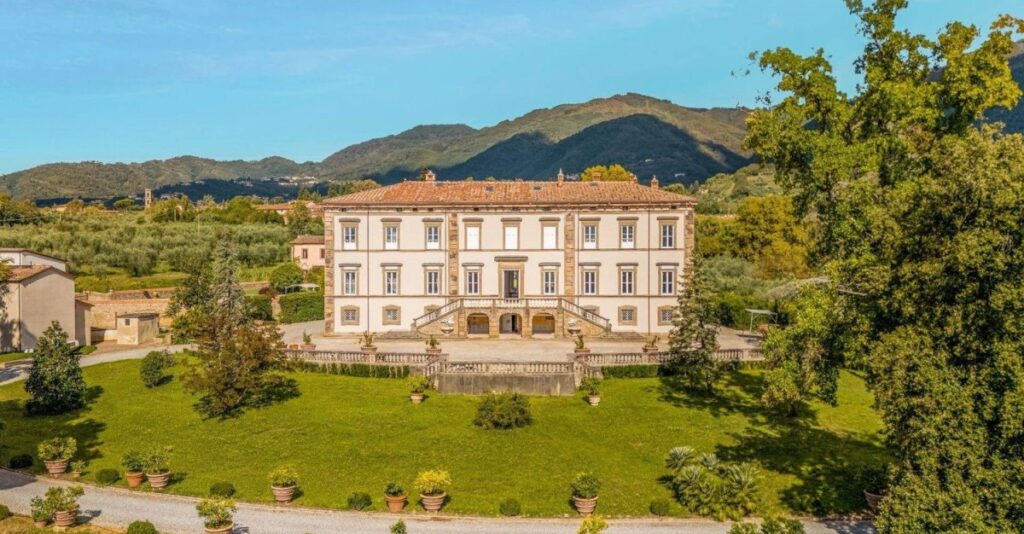
Originally constructed in the 16th century, the villa underwent its most transformative redesign during the 18th century under the direction of Coriolano Orsucci. What began as a distinguished residence soon developed into a refined pleasure villa, later gaining additional prestige with its acquisition by Caroline Bonaparte in 1836. Subsequent ownership by well-known Italian noble families continued to enrich the property’s legacy.
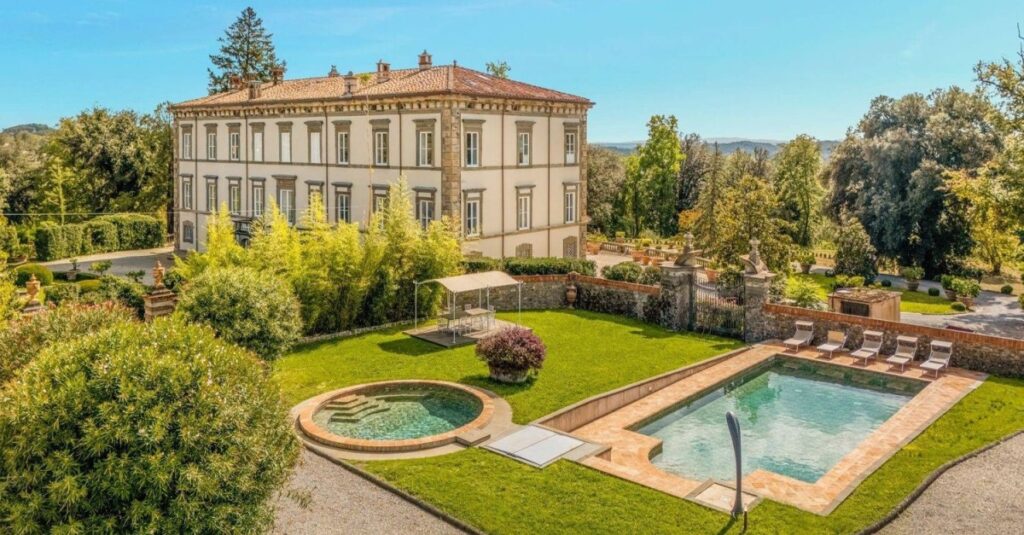
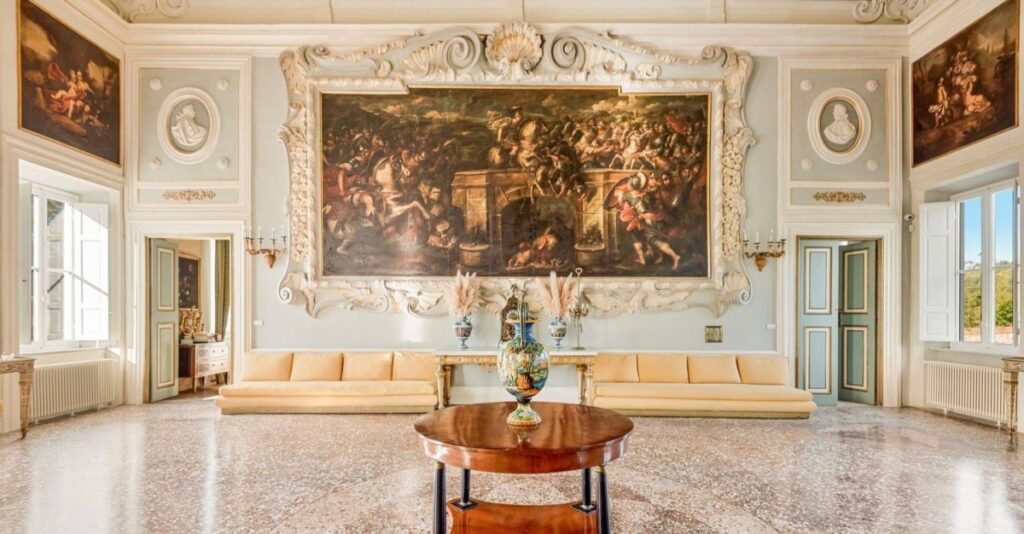
One of the estate’s most notable architectural features is the grand entrance portal to the walled garden, attributed to renowned Baroque architect Filippo Juvarra. Inside, a magnificent 125-square-metre double hall showcases elaborate stuccoes crafted by Sebastiano Puccini. Two monumental paintings — The Battle of the Milvian Bridge and The Rape of the Sabine Women — are believed to have been brought by Bonaparte herself. The villa’s iconic “red room,” with its original silk wall coverings and carefully preserved 18th-century furnishings, remains a highlight of the interior.
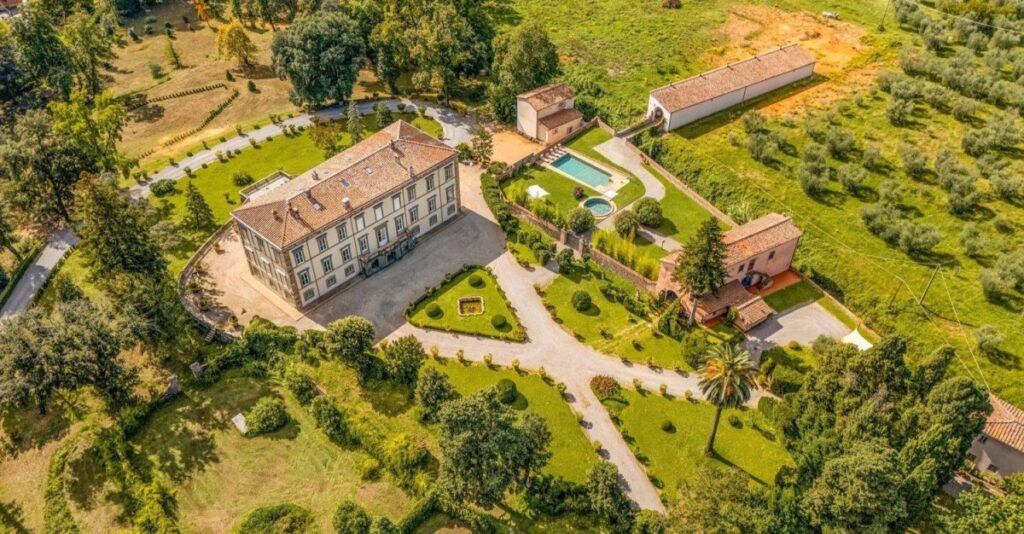
Beyond the main villa, the estate includes a 300-square-metre guesthouse featuring five double bedrooms with en-suite bathrooms, a refined dining room, and a fully equipped kitchen. Complementing the residential buildings are the historic stables and a 1,150-square-metre farmer’s house, which offer versatile opportunities for private use or boutique hospitality projects.
The Italian-style gardens complete the experience, integrating two swimming pools, terracotta sculptures, citrus groves, manicured hedges, and traditional gravel pathways. The harmonious relationship between architecture and landscape makes this estate not only a residence but a preserved piece of Tuscany’s artistic and cultural heritage.
A Symbol of Tuscany’s Cultural Identity
Today, this extraordinary villa stands as a testament to the enduring elegance of Tuscan history — a place where art, architecture, and nature converge. Though offered at €20,000,000, its true value lies in its legacy and in its rare position within Italy’s historical landscape.
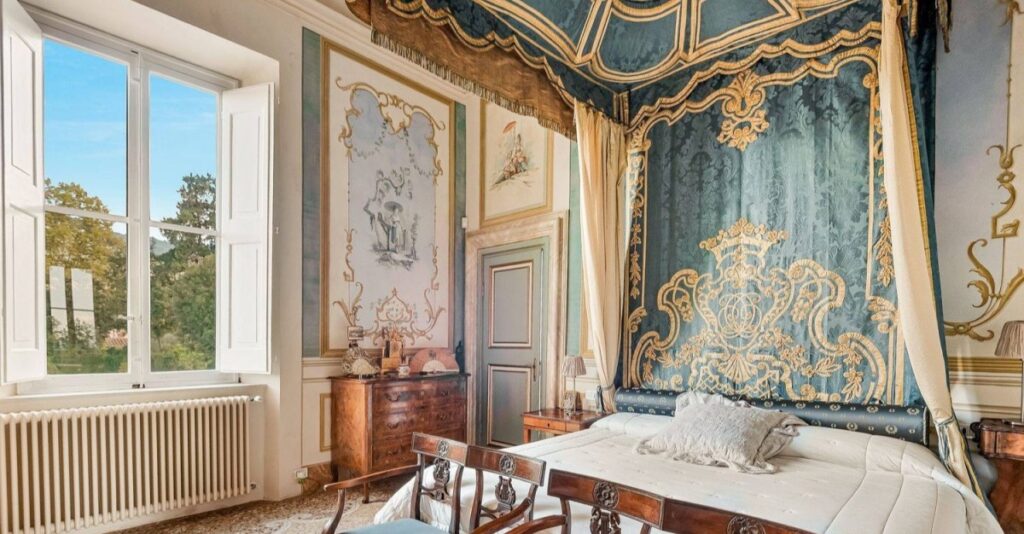
This estate represents far more than a property; it is a window into the region’s past and a remarkable example of Tuscany’s cultural identity preserved through the centuries.